get to know us
Honesty, integrity & experience
The average hardwood flooring cost is about $8 to $12 per square foot. Some exotic woods can cost more than $14 per square foot. Hardwood floors are known for their beauty and longevity. They are highly desired in American homes. However, the cost of hardwood floors can vary a lot. This leaves people wondering how to plan their budget for this home improvement. There are many things to consider, like the type of wood and installation costs. Understanding these details is key to figuring out the total cost. Knowing where to find the best deals on hardwood floors is also important.
Starting a home improvement project, especially with flooring, can be complicated. Hardwood floors are a top choice for many because they look great and add value to a home. Both wealthy homeowners and experienced remodelers think carefully about the cost of hardwood floors. The type of wood, its quality, plank size, and finishing touches all affect the price.
Prefinished floors might cost more at first but can save money on installation. The design’s complexity and the installation space’s challenges can also raise the labor cost. Additionally, where you live can change the cost because of different labor rates and material availability. Understanding all these factors is essential when planning to buy this impressive home feature.

Key Takeaways
- Understanding the average $8-$12 wood floor cost per square foot is crucial for budgeting a hardwood flooring project.
- Factors like wood species, grade, plank size, and finish impact the overall hardwood flooring cost.
- Prefinished floors may offer a higher upfront cost but can reduce installation expenses in the long run.
- Installation complexity and geographic location significantly influence the cost of hardwood flooring installation.
- An appreciation of price variations is necessary for finding the best hardwood flooring prices and making an informed decision.
Introduction to Hardwood Flooring Costs
Starting a home renovation can be exciting and scary, especially with hardwood flooring. It’s key to know the average cost of hardwood flooring to set a realistic budget. Hardwood floors are always in style and can make your home look better and more valuable. But, their prices change based on different things.

The first thing buyers do is use a hardwood floor cost estimator. This tool helps figure out the cost by looking at the size of your space, the type of wood, and how hard it is to install. It helps plan your budget so you can choose the right floors without spending too much.
Note that the average cost of hardwood flooring changes with the type of wood, where you put it, and current prices in your area. Prices can be very different in different places. So, it’s important to think carefully and plan. This ensures the floors you pick fit both your style and your budget.
Planning ahead and using good estimates lets homeowners deal with the cost of hardwood floors well. This way, you can find the right look for your home without spending more than you planned.
Factors Influencing Hardwood Flooring Prices
Knowing how the cost of your hardwood floors is affected is key for homeowners or contractors. Costs are shaped by the wood type, its quality and grade, how it’s installed, and where your property is.
Type of Wood Species
Wood species differ in looks and toughness, changing the cost of your floor. Exotic Brazilian cherry is sought after for its bright color and toughness. But, it’s pricier than options like domestic oak, which is cheaper but still looks great.
Quality and Grading Standards
The wood’s quality matters a lot for looks and price. High-grade woods, which look perfect and are durable, are more expensive. These higher-grade woods cost more because they look better and last longer, making them great for fancy places.
Installation Methods
How hardwood floors are installed can change the cost a lot. Nail-down installs are cheaper than complex designs that need more work and materials. Checking hardwood flooring vs laminate can show which is more wallet-friendly over time.
Geographic Location
Your location affects hardwood flooring installation cost too. In cities or high-cost living areas, labor costs can raise the cost of hardwood floor installation. Using a hardwood floor cost calculator gives a personal estimate, considering local prices and wood choices.

Average Cost of Hardwood Flooring
Looking into what wood floors cost per square foot is key. You’ll see different materials come with varying price tags. Basic hardwoods like oak might be $3 to $10 per square foot, just for the materials. Luxury woods such as hickory, maple, and walnut cost more. They are durable and look great, which bumps up their price.

Engineered hardwood is a less pricey choice, making it easier on your wallet. It looks and feels like real wood, stretching your dollars more. For those watching their budget, engineered hardwood offers a good mix of price and quality. It’s a strong alternative to traditional solid wood floors.
Understanding wood floor costs involves more than just the initial payment. It’s also about the long-term value and beauty it adds to your home. Investing in hardwood floors can really improve your home’s appeal and value. It’s a smart move for anyone wanting to enhance their space without sacrificing quality or style.
Cost Breakdown: Materials vs. Installation
It’s important to know all the costs of hardwood flooring before you decide. We’ll look at the costs for materials, installation, and extra charges. This helps you understand what you’ll spend on this popular flooring choice.
Material Costs
The price of the wood affects the material cost a lot. Woods like oak and maple are cheaper. But woods like teak and mahogany are pricier because they’re rare and look unique. To get a rough idea of costs, using a hardwood floor cost estimator online is helpful.
Installation Costs
Installation costs change based on the room size, how complex the job is, and local labor charges. If you want special designs or patterns, it costs more. Also, skilled workers in big cities usually charge more. It’s smart to get a few quotes to find the best price and service.
Additional Fees
There are extra charges besides just materials and installation. These include preparing the subfloor, finishing, and adding trim and baseboards. Don’t forget about the costs for upkeep and refinishing later on. Extra fees can be from $1 to $8 for every square foot. So, it’s key to plan your budget well.

By looking closely at all the costs and extra fees of hardwood floors, you can choose something that fits your style and budget.
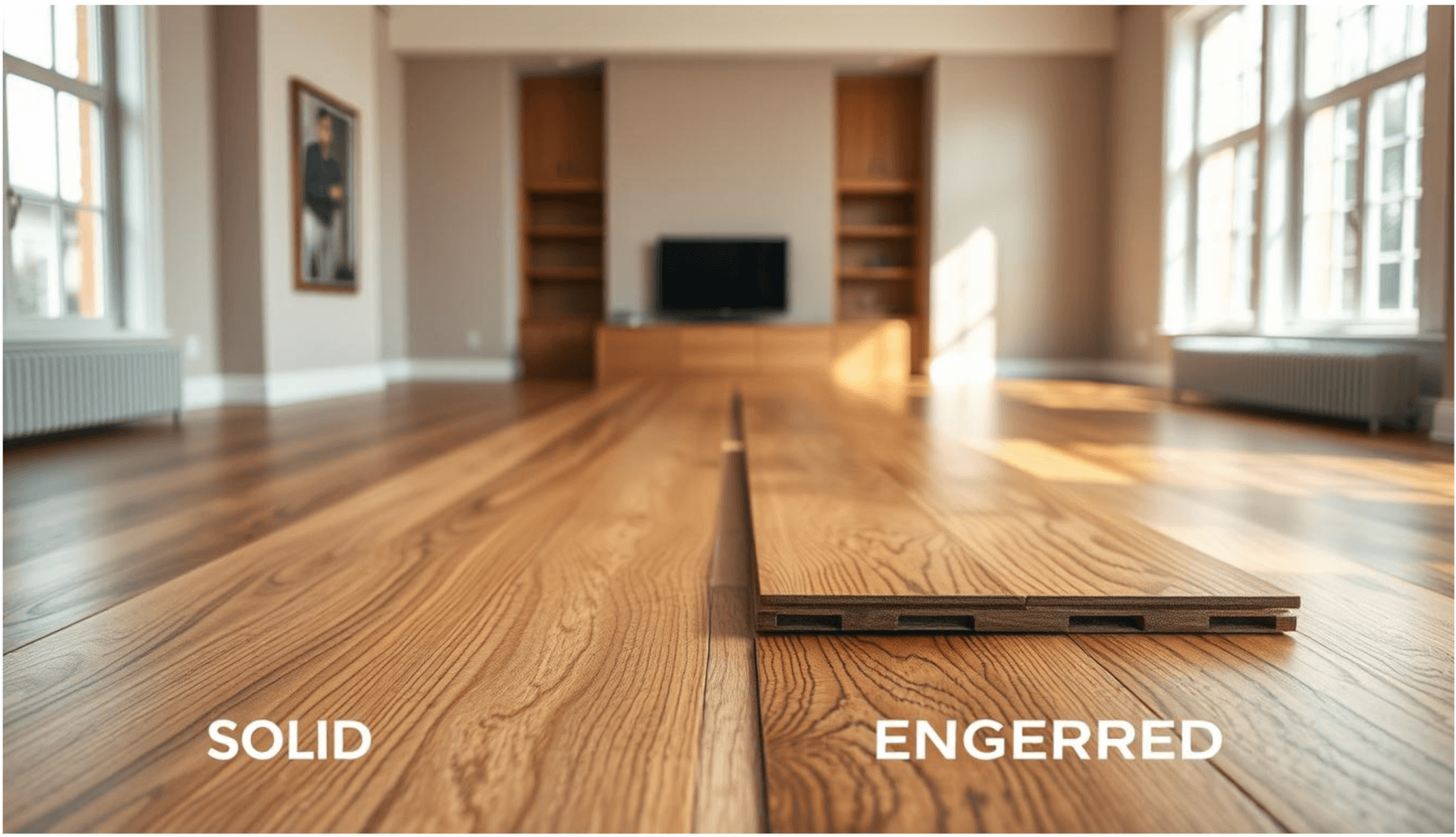
Solid vs. Engineered Hardwood Pricing
Choosing the right hardwood flooring means considering both types and their costs. Solid hardwood flooring is more expensive but lasts longer and looks more luxurious. Engineered hardwood, however, costs less and works well in moist areas.

Engineered hardwood is stable, making it a good choice for many subfloors and basements. This flooring has a hardwood layer on top of plywood. It handles moisture changes better than solid wood, making it great for humid places or concrete floors.
| Feature | Solid Hardwood | Engineered Hardwood |
|---|---|---|
| Cost per square foot | Typically higher | Generally lower |
| Installation suitability | Better for dry environments | Adaptable to various environments, including humid or moisture-prone areas |
| Longevity and Refinishing | Can be refinished multiple times | Can be refinished but fewer times than solid wood |
| Installation methods | Nailing | Floating, gluing, or stapling |
Your choice between solid and engineered hardwood depends on your budget and where you plan to install it. While solid hardwood flooring cost is more upfront, it can be worth it for its long life. Engineered hardwood flooring is less costly upfront and is better for areas with moisture.
Where to Buy Hardwood Flooring
Looking to buy hardwood flooring? People usually check out many places to find great deals and choices. This part talks about where you can buy hardwood floors. Each place offers something special depending on what you need or like.
Home improvement retailers are popular among DIY fans and pro builders. They have a big selection of hardwood floors, including solid and engineered types. These are perfect for any style and budget.
Local flooring stores give personalized help. They know a lot about the hardwood floors that work best in your area. They’re great for their hands-on help and deep knowledge of their products.
Then, there are online marketplaces. Shopping for floors online is easy now. You can look at lots of options and use tools like a cost calculator. This helps you plan your budget without leaving home.

| Outlet Type | Advantages | Typical Features |
|---|---|---|
| Home Improvement Retailers | Variety, convenience, one-stop shopping | National brands, variety of pricing options |
| Local Flooring Stores | Personalized service, local expertise | Custom solutions, regional products |
| Online Marketplaces | Comparative shopping, convenience | Cost calculators, wide selection |
Each shopping option has its own perks. This makes finding new hardwood floors both fun and worthwhile.
Seasonal Discounts and Promotions
Looking into hardwood flooring discounts during certain seasons can save you a lot of money. Stores often have big sales on wood floors, especially when they have too much stock or during big sale days like Black Friday. This helps you upgrade your home affordably.
We’ll show you the best times to buy so you get the lowest prices. This way, you can plan your purchase around these deals.
- Fall Clearance Sales: As summer ends, stores want to sell old stock to make space. This means big price cuts.
- Winter Holiday Promotions: During the holidays, you’ll find special offers and big discounts. It’s a great time to buy top-quality floors for less.
- Spring Refresh Discounts: Spring is perfect for updating your home. Retailers offer deals to encourage you to buy new floors.
- Mid-Summer Flash Deals: Sometimes, you’ll find quick sales in mid-summer. These offer huge savings but you have to act fast.
Knowing when sales happen not only saves you money but also helps in budgeting for home improvements.

When you’re thinking about getting new hardwood floors, watch for sale announcements. Buying during a sale can make a big difference in cost, making high-end floors much more affordable. Look around for the best prices and stay up-to-date on sales to get the most out of your home decor investment.
Long-Term Value of Hardwood Flooring
Hardwood flooring stands out for both its beauty and value. It lasts long because it’s durable and costs less to maintain. Investing in it boosts your home’s value over time.

Durability and Maintenance
Hardwood floors are popular for their lastingness. They can last for many years, looking good as new. They handle daily use well, staying beautiful for ages.
Yet, they need proper care, like regular cleaning and sometimes refinishing. Keeping them clean and dealing with spills fast cuts down on costs. It keeps the floors in top shape.
Resale Value Considerations
The investment in hardwood floors pays off when selling your home. Houses with these floors sell faster and may fetch higher prices. Hardwood floors make a home more appealing and valuable. It’s a smart choice for the future.
Frequently Asked Questions about Hardwood Flooring Costs
Hardwood floors are a favorite for making homes look better. But, questions about hardwood flooring price often come up as people figure out their budgets. In this section, we’ll tackle the most common questions on wood floor installation costs. This will help you make better decisions.

- What factors most significantly affect the cost of hardwood flooring?
- Are there notable differences in cost between solid and engineered hardwood?
- Can refinishing my hardwood floors reduce long-term costs?
- How does the choice of wood species impact pricing?
By understanding these points, buyers can choose wisely. They’ll find options that match their taste and what they can afford.
Conclusion: Making an Informed Decision
Choosing the right hardwood flooring is a big choice. It affects your home’s look, value, and how it functions. Finding the balance between what you like, how much you can spend, and how long it will last is key. We’ve looked at what can change the price of hardwood flooring – like wood type, how it’s put in, and where you live.
Knowing the costs helps homeowners pick the best hardwood flooring. You can find something affordable without sacrificing quality. Solid hardwood offers strength, while engineered hardwood brings versatility. The secret is to plan your budget and really think about what your home needs. This way, your home’s look will improve, and your investment will last a long time.
The best choice in hardwood flooring looks at everything we’ve talked about. It matches your lifestyle and shows you know the benefits long-term. You want floors that are both pretty and tough. Following these steps will lead you to hardwood floors that are more than just something to walk on. They become valuable parts of your home.
FAQ
What factors influence the cost of hardwood flooring?
The price of hardwood floors depends on the wood type, quality, installation, and where you live.
How do the costs differ between solid and engineered hardwood?
Solid hardwood costs more because it lasts longer and can be refinished. Engineered hardwood is less expensive and resists moisture better.
What are the average costs for hardwood flooring materials?
Standard hardwood like oak costs about $3 to $10 per square foot. Higher-end woods like hickory and walnut cost more.
How much does hardwood flooring installation cost?
Installation adds $3 to $8 per square foot to your bill. The cost varies with the project size and local labor rates.
What additional fees should be considered when installing hardwood floors?
Extra costs may include subfloor prep and finishing. You might also pay for baseboards and future upkeep, adding $1 to $8 per square foot.
Where can I purchase hardwood flooring?
You can find hardwood floors at home improvement stores, local shops, and online. They come in many types and finishes.
Are there seasonal discounts available for hardwood flooring?
Yes, you can often find discounts during off-peak times or clearance sales.
How does hardwood flooring add long-term value to my home?
Hardwood floors increase your home’s value because they last long and look great. Solid hardwood offers the best return on investment.
How does the durability and maintenance of hardwood floors impact costs over time?
Hardwood floors can last over 50 years with proper care. They need regular cleaning and occasional refinishing but keep costs low over time.
How do wood species and flooring options impact hardwood flooring costs?
Wood type and flooring choices affect cost. Things like wood species, plank size, and whether it’s solid or engineered wood make a difference. Exotic woods and premium options usually cost more.
continue reading
Related Posts
Vestibulum ante ipsum primis in faucibus orci luctus et ultrices posuere.
Curabitur non nulla sit amet nisl tempus convallis quis ac lectus mauris.